
I. The only dimension of diversity that affects us all
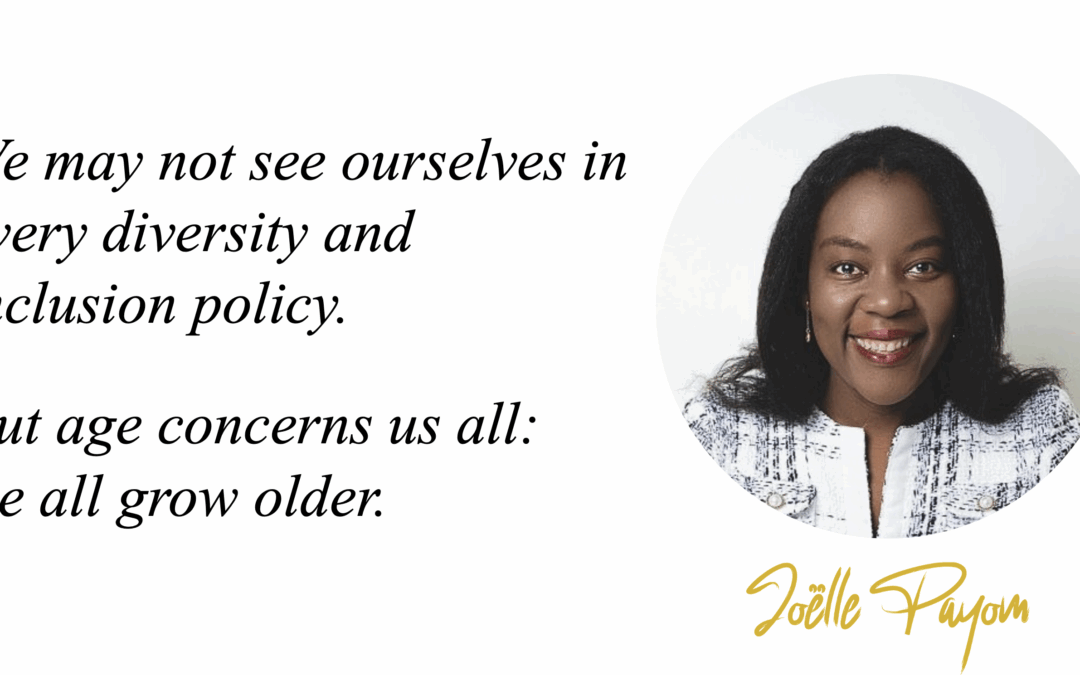
Age is the only dimension of diversity that affects everyone, without exception. Because we all grow older. Everyone.
You might not identify with every diversity policy or feel that certain topics don’t concern you directly. But no one can escape the question of age.
We all move forward in time: our bodies change, our experiences accumulate, and our perception of our role at work evolves.
Yet, this universality does not shield us from bias. In fact, it can make biases even harder to see.
Ageism affects everyone and quietly shapes key professional decisions, influencing career trajectories in ways that often go unnoticed.
II. Age at Work is rarely discussed neutrally
When age comes up in the workplace, it’s rarely addressed in a neutral way.
People talk about:
- Young employees as “not mature enough”
- Senior employees as “not agile enough”
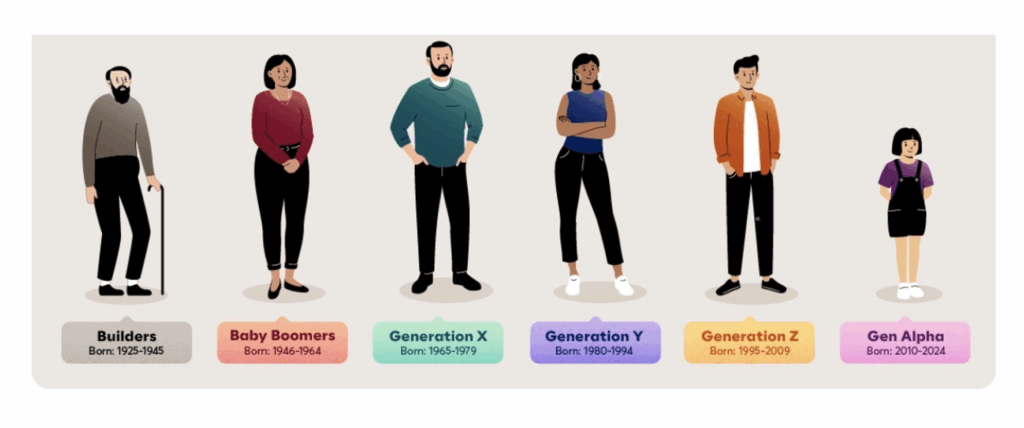
- Generational divides and misunderstandings
These shortcuts, now familiar, stem from cognitive biases—neuroscience has identified over 180 of them—that influence our judgments without our conscious awareness. At work, these biases shape decisions about hiring, training, and promotion.
Biases, stereotypes, prejudices, discrimination: these four terms are often confused, but they are distinct, even if closely related.
- Stereotype = An oversimplified general belief.
- Bias = A mental shortcut influenced by stereotypes.
- Prejudice = A negative judgment or attitude without individual knowledge.
- Discrimination = Behavior that excludes or disadvantages someone without valid justification.
➡️ Stereotypes feed biases. Biases feed prejudices. And if left unchecked, these can escalate into discrimination.
Among these forms of discrimination, ageism in the workplace is equally important, because it touches on competence, legitimacy, authority, and even fear of being sidelined—felt by both senior and junior employees alike.
III. When does a factor become discriminatory?
At what point does a factor become discriminatory? Often, it’s when it is neither questioned, documented, nor justified.
Here’s a brief self-reflection exercise:
- Think about the last professional decision you were involved in—hiring, promotion, training request, internal mobility…
- Age wasn’t explicitly listed among the objective selection criteria.
- Ask yourself honestly: did age still influence your perception, even for a moment?
If the answer is yes, that’s normal. It’s neither a fault nor a confession—it’s simply how our brains work.
IV. When rules are not enough to protect
For a long time, like many, I believed that laws, rules, codes, and procedures were enough.
Until the day I faced, both personally and professionally (as an investigator and trainer), situations where everything was compliant on paper—but in reality, no one was truly protected.
- Colleagues notice, look away, stay silent
- HR waits for management to intervene
- And in the middle:
- Silence
- Isolation
- Fear of retaliation
- Ineffective systems
Tensions arise, escalate into conflicts, and sometimes turn into harassment, all underpinned by often unspoken discrimination—based on age or other demographic and cognitive factors.
That’s when I realized something crucial: at work, the problem is not always individuals. It’s the systems meant to protect them.
V. Systemic issues require systemic solutions
Exclusion mechanisms linked to age—as with other aspects of being human—are never purely relational, legal, or psychological. They sit at the intersection of multiple disciplines. They are complex. They are systemic.
Recognizing this, I stopped searching for isolated solutions and instead built an integrated response. This is how Rezalliance was born:
- A multidisciplinary alliance designed to support both individuals and organizations on the path to psychological and organizational resilience.
Because we are not all equal in the face of life’s challenges. Resilience doesn’t happen magically—it depends on many factors: personal history, health, environment, and external support.
The stage of our career also affects our ability to bounce back after emotional setbacks: experiences are not the same at 25, 45, or 58, depending on financial security, perceived employability, and available leeway.
No one should face discrimination or harassment alone—at work, school, or elsewhere.
VI. Neutralizing bias : an employer’s responsibility
However, this responsibility can only be upheld if the organization puts in place coherent systems designed to prevent, detect, and address biases before they result in harm.
Solutions exist.
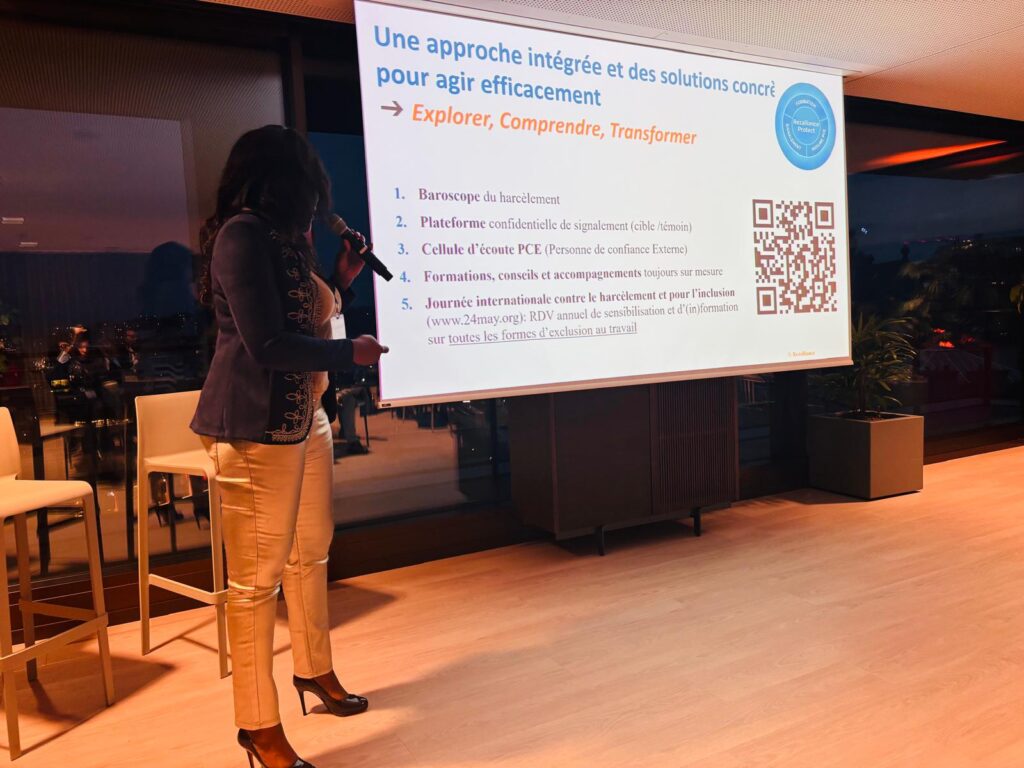
At Rezalliance, they form a cohesive ecosystem to raise awareness, detect, prevent, and manage at-risk situations:
- Workplace harassment barometer
- Confidential feedback platform
- External Trusted Person listening unit (PCE)
- Customized training, coaching, and advisory services
- International Day Against All Forms of Workplace Exclusion
Individually, these tools have impact. Taken together, they can transform organizational culture profoundly.
VII. Age and employment in Switzerland: A two-speed reality
My vision of inclusion is rooted in personal and professional experience, but also informed by careful analysis of the job market realities.
In Switzerland, unemployment remains relatively low, around 2.8%, creating the appearance of a stable market. But this stability doesn’t benefit everyone equally.
Workers over 50 are the biggest losers:
- 41% of layoffs in 2025 involved employees over 50 (source: Blick).
- Older workers remain unemployed longer: 7.4 months on average vs. 6 months for younger employees.
- A new category has emerged: NER (Neither Employed Nor Retired)—too old to be hired, too young to retire.
Behind these numbers lies a familiar reality: perceived employability drops sharply after a certain age, regardless of actual skills.
Younger workers are not spared:
- According to the Federal Statistical Office, unemployment among recent graduates rose from 2.7% to 3.2% between 2021 and 2023.
- Registrations at regional employment offices increase, while job postings on some university platforms decline.
These figures reveal more than market tension—they reflect differentiated but related exclusion mechanisms: age as an implicit filter of legitimacy. At entry and exit points in careers, age-related biases weigh heavily, shaping trajectories far beyond what the numbers suggest.
VIII. Where does your organization stand?
Ageism isn’t always explicit; it spreads through ordinary practices. The question is not whether your organization is affected, but where it stands today.
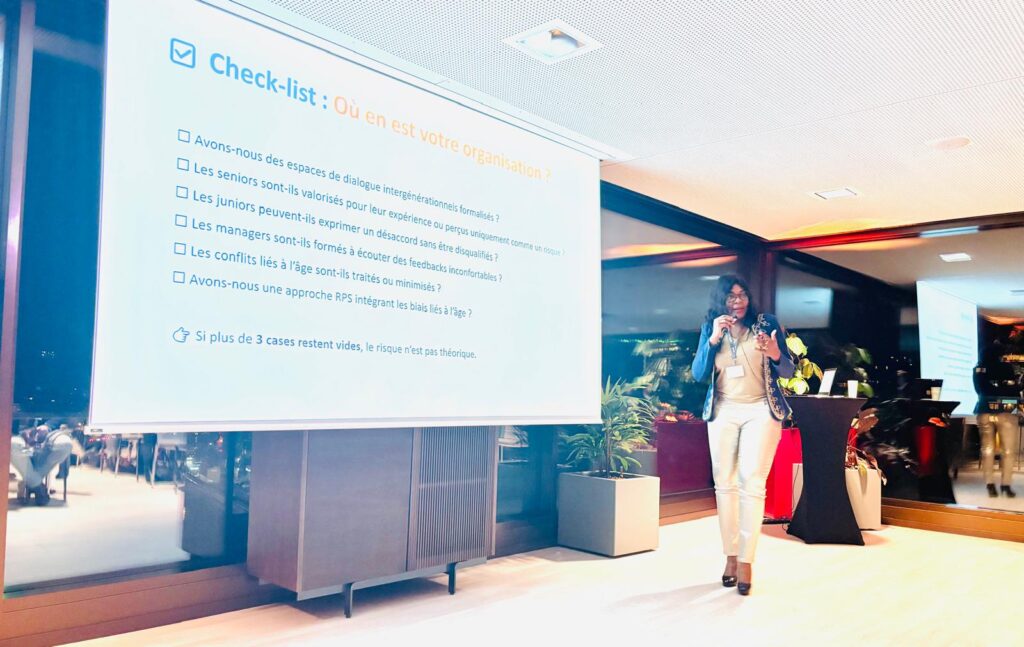
Here’s a short checklist to start reflection and self-diagnosis:
☐ Are there formal intergenerational dialogue spaces?
☐ Are senior employees valued for experience, or seen only as a risk?
☐ Can junior employees voice disagreement without being disqualified?
☐ Are managers trained to handle uncomfortable feedback?
☐ Are age-related conflicts addressed or minimized?
☐ Does your psychosocial risk approach integrate age-related biases?
👉 If more than three boxes remain unchecked, the risk is real.
These questions often highlight gray areas or points of tension—and these are where action levers lie.
IX. Leveraging generational diversity
Here are five actionable HR levers:
- Encourage intergenerational mentorship.
- Create spaces for collaboration and collective intelligence.
- Promote a culture of continuous and reverse feedback (not just top-down).
- Train managers on bias, emotional intelligence, interculturality, conflict management, and psychosocial risks.
- Adopt a preventive approach with effective tools rather than a reactive one.
X. Ageism is a collective responsibility
Diversity is a fact. Inclusion is a choice. A choice to neutralize the impact of collective biases so that talent can flourish at every age.
At work, individuals are expected to act impeccably. But addressing bias doesn’t mean demanding perfection—it means building systems that prevent biases from turning into unfair decisions.
Ageism isn’t always intentional, but it is too often tolerated. Long relegated to the margins of diversity policies, it remains the most socially acceptable form of exclusion today.
📙 This article builds on the reflections initiated during the conference held on February 5, 2026, co-organized with the Qualife Foundation for the launch of the Qualife Club. It invites a clear-eyed examination of how this biological reality is addressed in the workplace—at the individual, collective, and organizational levels.
Discover our solutions for healthy and equitable workplaces ⤵️
📋 Experiencing harassment at work? Take our online self-assessment.
🛟 Need personal support? Our experts are here for you.
⚙️ For organizations: Discover our custom solutions.
📡 Learn more about our public awareness work through International Day Against Harassment and for Inclusion in the World of Workhttps://24may.org/en/.